
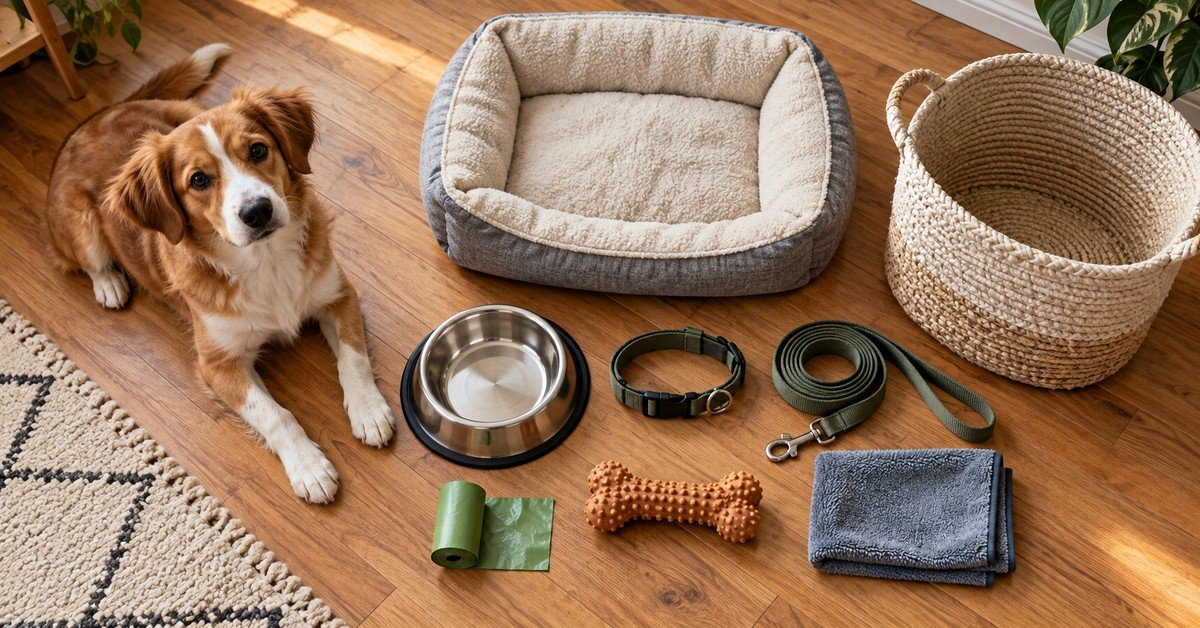
Dog gear kits vs buying supplies separately comes down to convenience versus control over each item’s fit, function, and replacement. A bundle can be convenient when it includes several items you already need. Separate purchases usually make more sense when fit, material, size or cleaning needs differ across your dog’s gear. The right comparison is the total usable setup, not the bundle’s piece count.
Jump to a specific section on this article
Contents
Compare the contents before comparing the price
List the items that solve a real need this month. For example: a crate, bed, bowls, leash, ID, waste bags and food storage. Mark the items you already own, the items that must fit precisely, and the items that can wait. A kit’s advertised total can include inexpensive accessories you would not otherwise buy, so compare the price of the useful pieces with the separate prices of the same pieces.
This is especially important for a new dog. If you still need a correctly sized crate or harness, the bundle is only a starting point. Use the essential gear guide to decide which jobs matter before checking a cart total.
When a bundle earns its place
A bundle makes sense when the components fit together, the included sizes match your dog, and you can name a use for each item. A crate kit that includes a bed and cover can reduce the time needed to create a rest corner. A leash-and-harness set can simplify the first walk if the measurements work. A toy assortment can give you a few options, but introduce items gradually and supervise new toys.
The MidWest iCrate starter kit is an example of a true multi-piece package. By contrast, a custom starter setup may be built around an individual crate and separate bowls. The apartment bundle comparison labels those differences instead of treating every grouped recommendation as a sold-together kit.
When separate purchases are the better fit
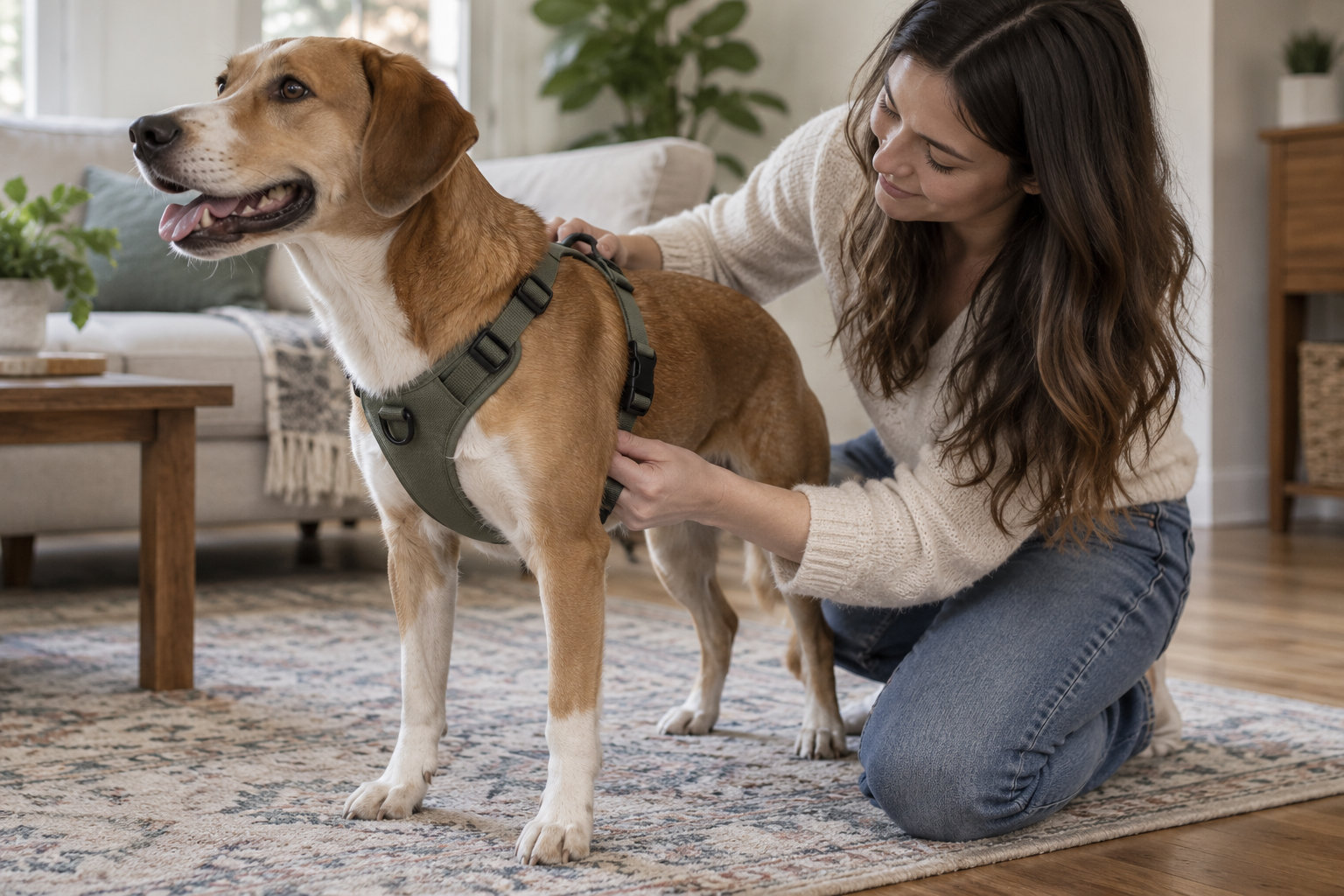
Buy separately when one item has a safety or sizing role. A car restraint needs to match the dog and vehicle. A harness should be measured and tried on. A crate must fit the dog and the room. Food, medication and grooming supplies also vary too much to choose by bundle count. Separate buying gives you more control over those details and lets you skip items that would sit unused.
Separate shopping does create more decisions and may involve more deliveries. Keep a short checklist so you do not forget an important job while comparing colors or optional accessories. For a newly adopted dog, make the rest area and first-week routine simple; the new-home setup guide stages the purchases.
Think about waste as well as price
A low price is not a saving if half the kit is a poor fit or quickly discarded. Check whether the items can be washed, repaired or replaced individually. Ask whether the dog can use them safely now and whether the product’s size range allows useful adjustment. If an item is too small, too hard to clean or uncomfortable, the kit may create clutter instead of value.
For emergency supplies, separate the first-aid pouch from the evacuation bag. Medical supplies do not replace food, water, records, medications and safe transport. See the evacuation kit review for the difference.
Compare the finished setup, not the advertised box
Write down the jobs your dog’s current gear does not cover, then price a complete solution for each. For example, a crate bundle may include a bed and bowls but still omit a leash, ID, food, cleanup supplies and car restraint. A large accessory kit may include those small items yet still have no correctly sized crate. Compare the kit plus the missing essentials against the separate list, including shipping and any items you already own.
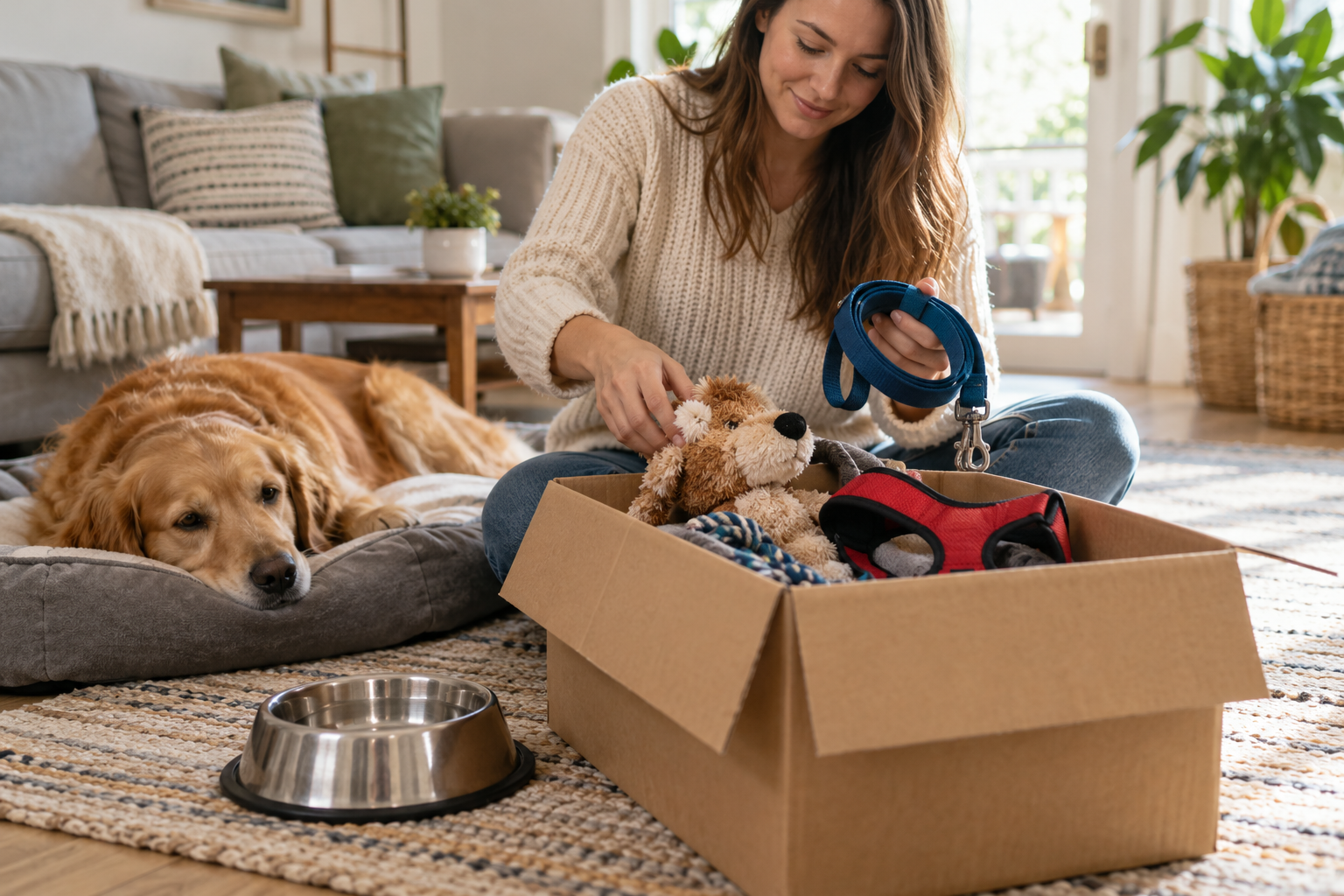
The calculator later in this guide is deliberately simple: it totals the prices you enter. It cannot score durability, comfort, sizing, return terms or how much of a bundle will go unused. Those checks require a look at the product specifications and the dog’s needs. If a size-sensitive item is uncertain, do not let a bundle discount push you into keeping a poor fit.
Use wear and replacement to estimate value
A practical comparison includes what happens after purchase. Can you wash the bed cover? Replace a worn leash? Find a spare buckle or a matching part? Does the manufacturer publish care directions and dimensions? A kit may be cheaper today but harder to maintain if one component fails. Separately purchased items may cost more up front yet let you replace only the worn part.
Waste also has a time cost: storing unused toys, sorting duplicate bowls and disposing of items the dog cannot safely use. A bundle earns its place when the included pieces fit and see regular use. Separate purchases earn theirs when each item can be selected for size, function and cleaning. Revisit the choice as the dog grows, changes activity or develops a different routine; no one-time purchase has to define the whole gear setup.
Dog gear kits vs buying supplies separately: compare the same setup
Make one list of the items you actually need, then record the bundle’s price, shipping cost and each useful included component. On the separate-purchase side, list the equivalent items in the sizes you need. Do not assign value to a duplicate or a toy the dog cannot use. If the bundle contains an item you would not otherwise buy, leave it out of the savings calculation rather than treating its retail price as money saved.
The worksheet should also capture return terms and replacement options. A bundle with one poor-fitting harness may be harder to keep than separate items that can be returned individually. Check whether the seller permits a partial return and whether all items must remain unused. The calculator gives a price difference, not a quality score; use the table and the dog’s fit checks to decide whether the lower total is a useful purchase.
Price the inconvenience and waste honestly
Separate orders take time and may arrive on different days. A bundle can reduce that effort, but only when the pieces match the task. Give convenience a real value if a single delivery solves an urgent setup need; do not inflate the savings by adding prices for extras you would never use. For a newly adopted dog, it may be sensible to buy the immediate essentials first and wait on optional items until you know the dog’s preferences.
Waste includes duplicate supplies, unsuitable sizes and gear that is difficult to clean or repair. Before checkout, check dimensions, materials, care instructions and whether replacement components are available. A slightly higher separate-purchase total can be the better use of money when it lets you choose a safer size or avoid pieces that will sit unused. The right comparison is the cost of a complete, usable setup for this household.
A fair side-by-side comparison
| Question | Bundle | Separate supplies |
|---|---|---|
| Shopping time | Fewer listings and deliveries | More comparison and coordination |
| Fit control | Depends on bundled sizes | Choose size and model item by item |
| Waste risk | Unused add-ons can accumulate | Buy only the items on your list |
| Replacement | Some components may be hard to replace alone | Replace a single worn item |
| Best use | Several included items already match needs | Safety- or size-sensitive equipment |
Count only pieces you would use.
Include shipping and delivery time.
Choose a different item if the listed size is wrong.
Do not call unused extras savings.
Two useful examples to price-check
For a genuine bundle example, the MidWest iCrate Starter Kit groups a crate, bed, cover and bowls. For a build-your-own crate base, the New World folding crate is sold as an anchor item; you would choose the bed, bowls and walking gear separately. They are not a direct like-for-like price comparison, so use the calculator with the components you actually need.
Affiliate disclosure: As an Amazon Associate, Very Well Dog earns from qualifying purchases.
Bundle-versus-separate cost calculator
Enter the prices shown for items you would genuinely use. The calculator compares your bundle price with the separate-item total; it does not score fit, durability or quality.
Enter the bundle price. Empty separate-item fields count as $0.
For the care basics that every setup should support, the ASPCA dog-care guide is a useful reference; this comparison focuses on how to purchase the equipment those routines require.
FAQs
Are dog gear bundles cheaper than buying separately?
Sometimes, but compare the bundle price with the cost of the useful items only. Do not count accessories you would not use as savings.
What should I buy separately?
Buy separately when fit, health, size or safety requirements are individual. That often includes harnesses, car restraints, crates, food and medications.
Do more pieces mean better value?
No. Piece count can include small accessories that are not useful to your household. Compare quality, sizing, replacement options and the specific jobs the items cover.
How do I avoid wasting dog supplies?
Choose items around a written needs list, check sizing and care instructions, introduce toys gradually and avoid buying duplicates. Keep receipts until the fit is confirmed.
The practical verdict
When deciding on dog gear kits vs buying supplies separately, compare the useful items, fit, replacement options and delivery costs. Choose a bundle when several included pieces suit your dog; buy separately when sizing, safety or care needs vary. Add missing essentials, ignore filler in the advertised count and choose the route that leaves less unused gear.