
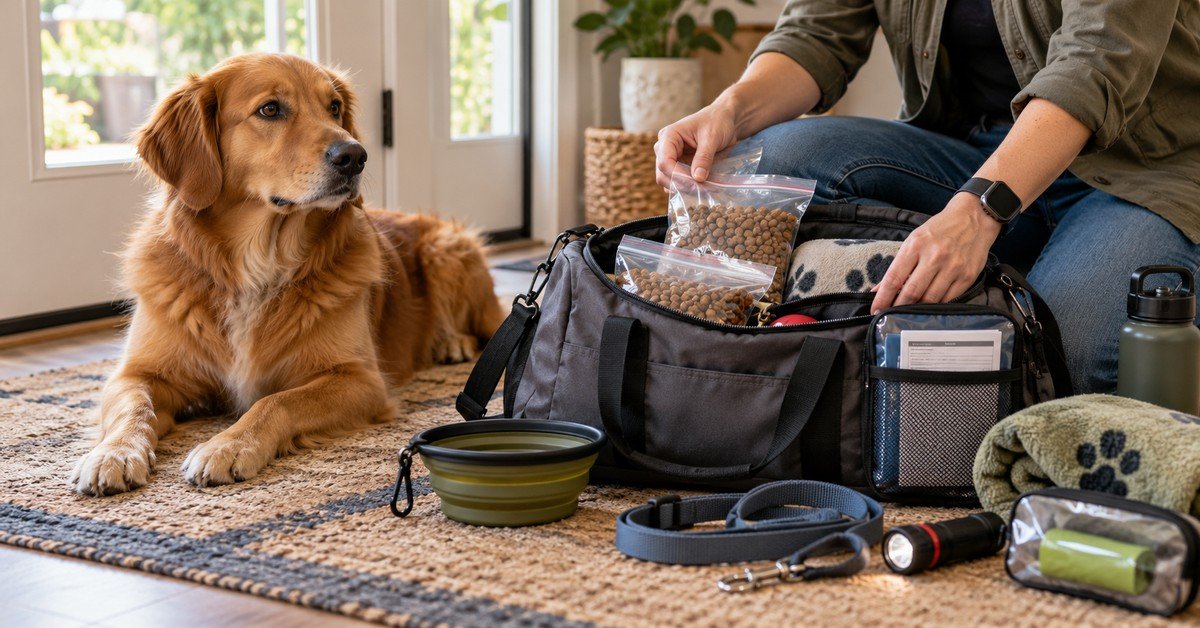
Best dog gear emergency kits for evacuations are useful only when they support a complete plan for the dog, household, route, and destination. A first-aid pouch is not a go-bag: it may have bandages but no food, water, carrier, medication or medical records. I separate ready-to-carry evacuation packs from first-aid kits below so the product label does not create a false sense of readiness.
Jump to a specific section on this article
Contents
At a glance
| Pick | What the listing covers | Best fit / check |
|---|---|---|
| Pet Evac Pak Small Dog | Evacuation bag with food and water supplies | Check weight range and shelf dates |
| Ready America Small Dog | Evacuation supplies plus soft-sided carrier | Check carrier fit and water quantity |
| EVERLIT Pet Medic | First-aid pouch | Add evacuation supplies |
| Kurgo RSG | Compact trail first aid | Add food, water and transport |
| Adventure Me & My Dog | Human and canine first aid | Add dog-specific go-bag items |
| Ruffwear BackTrak | Dog-carrying sling with first-aid muzzle | Measure fit; pair with a go-bag |
| ARCA Cat & Dog | Vehicle first-aid kit | Keep out of heat; add food and water |
| American Pet Supplies | Small travel first-aid kit | Limited contents; supplement |
| Sweet Inhale | Refillable medical pouch | Owner must pack supplies |
| My Medic Pet Medic | Compact first-aid pouch | Add evacuation supplies |
How I compared the options
I sorted these products by their stated role: complete go-bag, first-aid pouch or storage aid. The list is based on published contents and coverage claims, not a field test during an emergency. A small first-aid pouch cannot stand in for food, water, records, medication, identification and a safe transport plan. The CDC’s pet disaster-kit checklist is a practical cross-check for supplies a commercial kit may leave out. Recheck current coverage claims and pouch contents, then add the dog’s own food, prescriptions, records and identification.
A kit is only one part of an evacuation plan
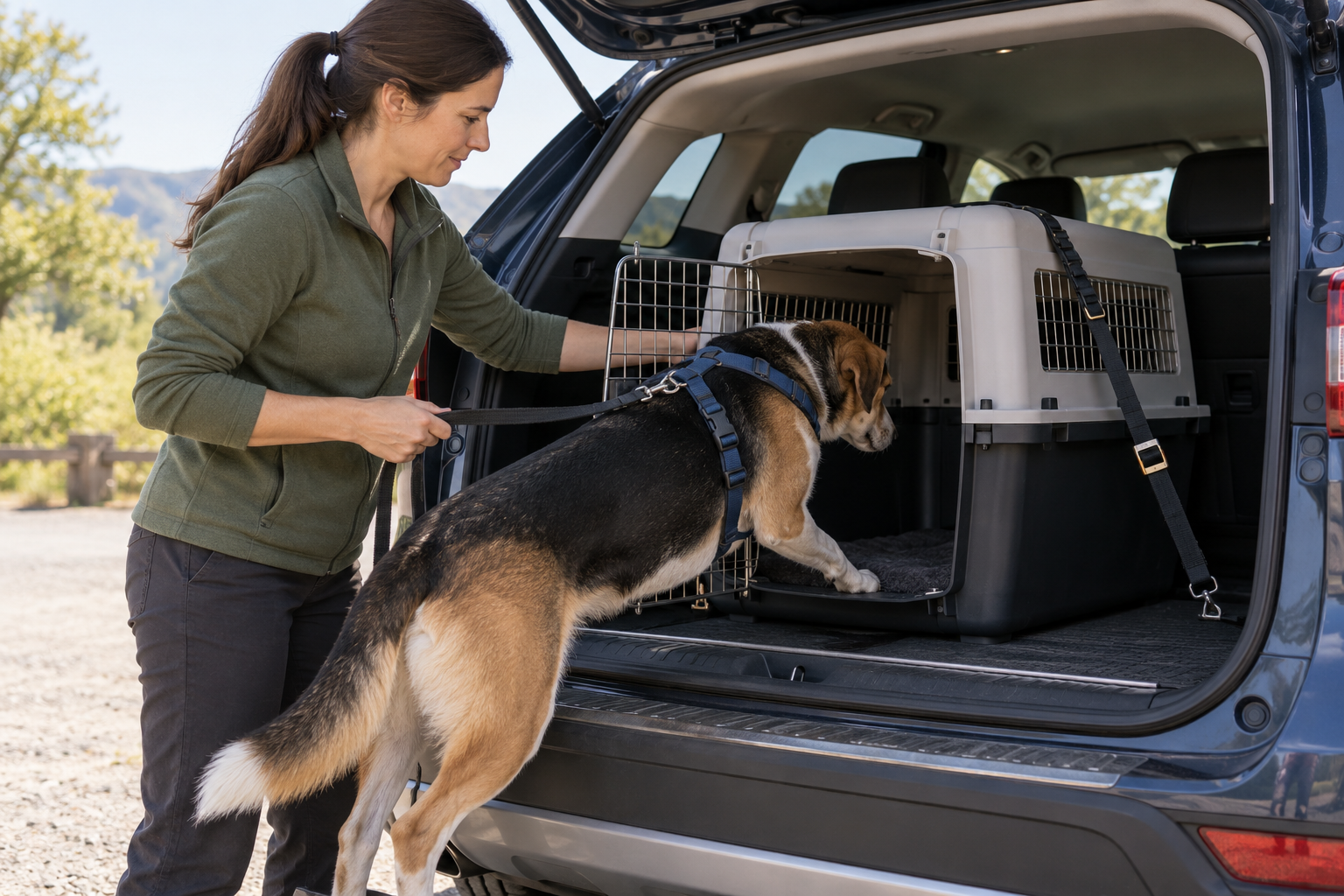
Before buying a bag, decide how the dog will travel and where you can go. Keep a carrier or restraint that fits the dog and the vehicle, current identification, a recent photo, veterinary contact information and copies of medical records. If the dog needs medication or a special diet, make those supplies part of the plan and ask the veterinarian how to prepare for a disruption. A ready-made pouch rarely knows the dog’s health history.
Pack familiar food and water in a quantity that matches local emergency advice, the dog’s size and the time you may be away. Store supplies so they remain usable, and check food, medication and batteries for dates or condition. A printed checklist helps a second caregiver take the bag without relying on memory. The CDC’s checklist is the source linked above; tailor the contents to your household and local hazards.
Practice leaving before there is an alert
Keep the bag near the exit but away from heat, damp and curious chewing. Once in a while, practice clipping on the leash, securing the dog for transport and carrying the bag. This can expose a missing leash, an unfamiliar carrier or a route that is blocked by stored gear. Replace items after practice if they are opened or used.
If a dog is fearful of a carrier or restraint, build comfort gradually during ordinary days and seek professional guidance where needed. Do not wait until an evacuation warning to introduce unfamiliar equipment. During a real emergency, follow local authorities’ instructions and use the safest available route. A compact first-aid pouch can support the plan, but it does not replace shelter access, transport, food, water and records.
Build the everyday items from the daily gear checklist first. For a household welcoming a dog, the first-home setup comparison covers bedding, routine and records. If the evacuation plan includes a car harness or travel equipment, compare fit and use in the long-term equipment review.
What a real evacuation bag needs
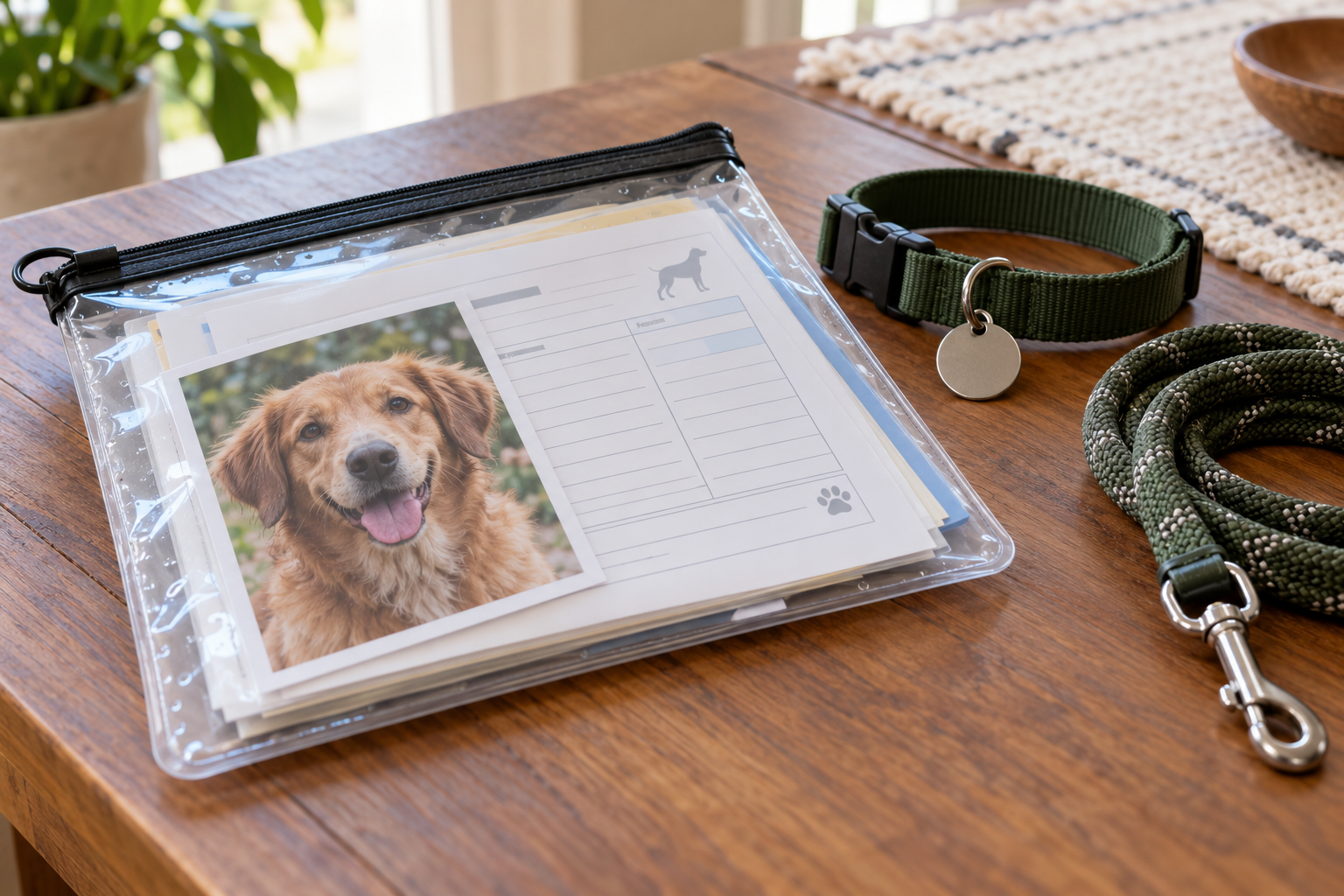
The CDC pet disaster-kit checklist recommends a two-week supply of food, water and any needed medication, plus bowls, leash and ID, a carrier, veterinary records, photos, microchip details and cleaning supplies. That is a useful planning baseline, not a promise that every evacuation will last two weeks. Keep medication instructions and records in a waterproof sleeve, and ask your veterinarian what first-aid supplies are appropriate. A pouch of bandages is first aid; it is not a complete evacuation kit.
Familiar food, water and bowls.
Leash, secure carrier or vehicle plan.
Current ID, photo and contact details.
Medication, records and first-aid supplies.
Days of food and water represented by the product’s stated coverage and CDC’s checklist.
Hover or focus a bar for its source detail. Product coverage is the manufacturer’s claim; the CDC checklist is a separate preparedness benchmark.
Affiliate disclosure: As an Amazon Associate, Very Well Dog earns from qualifying Amazon purchases. The three manufacturer product links in this guide are direct links and do not earn us a commission.
1. Pet Evac Pak Emergency Kit for a Small Dog – Best for small dogs within the product’s stated range
For a small dog, Pet Evac Pak is the ready-to-carry kit in this comparison. Pet Evac Pak’s small-dog bag is designed for evacuation and travel, and the listing describes a 72-hour supply. Check the exact dog-weight range, food compatibility, shelf dates and the actual contents when it arrives. Add your dog’s usual medication, records and a familiar item.
Keep a written restock card in the bag and rehearse carrying it from the storage spot to the car or exit. That quick practice reveals missing handles, paperwork or space for the dog’s current supplies before an evacuation begins.
2. Ready America Small Dog Evacuation Kit – Best for small dogs when a carrier is part of the kit
The Ready America kit is the only pick here that pairs emergency supplies with a soft-sided carrier. The manufacturer calls it a three-day small-dog kit and lists food, water pouches, a bowl, leash, cleanup bags, wipes, basic first-aid items and an ID tag. It says the carrier is rated for dogs up to 25 pounds; check its dimensions and make sure your dog can settle comfortably before relying on it.
The water amount deserves a separate check: the listed three pouches are 4.225 ounces each, or about 12.7 ounces total. Compare that with your dog’s actual needs and the evacuation conditions, then add enough water rather than assuming the three-day label covers every dog. Contents can vary, so read the current listing before packing.
3. EVERLIT Pet Medic First Aid Kit, 95 Pieces – Best for a broad first-aid inventory
The EVERLIT Pet Medic is a general first-aid pouch for home or car, with a broad mix of medical and outdoor pieces. It can cover one layer of a plan, but it does not supply evacuation food, water, a carrier, records or a destination. Ask your veterinarian which items are suitable for your dog.
Learn what the included tools are for before packing the pouch away. A short inventory sheet helps the caregiver locate supplies quickly, and a restock check after use prevents the kit from appearing ready when key pieces are gone.
4. Kurgo RSG Dog First Aid Kit – Best for carried dog first-aid supplies
The RSG pouch is a compact trail option designed to attach to compatible gear and carry basic field supplies. Its portability is useful, but it cannot cover every emergency. Pair it with separate food and water, and know when an injury needs veterinary care.
Assign one place for the pouch on the pack or vehicle kit and check its contents after every outing. Keep it reachable without letting loose straps or attachments dangle where the dog can chew or catch them.
5. Adventure Medical Kits Me & My Dog Medical Kit – Best for owners comparing shared outdoor first aid
Adventure Medical Kits’ Me & My Dog kit combines human and canine first-aid supplies in waterproof storage. That can simplify a trail pack, though it still needs enough supplies for each person and dog, plus the separate evacuation essentials.
Use the waterproof bags to separate items by person and animal, then label them clearly. If another caregiver may carry the kit, show them where the dog-specific supplies are and how to find veterinary contacts.
6. Ruffwear BackTrak Dog Evacuation Kit – Best for carrying a dog that cannot walk out under its own power
BackTrak solves a different problem from a stocked go-bag. Ruffwear describes it as a human vest with an attached dog-carrying sling plus a lightweight muzzle intended for first-aid use. It is meant to help carry a sick or injured dog that cannot make the return trip under its own power; it does not supply food, water, records or a destination plan.
Measure the dog’s girth against the current size chart and practice fitting the sling before a trip. The muzzle is a limited first-aid component, not a substitute for veterinary care or a general-purpose restraint. Pack this alongside a separate evacuation bag if transport assistance is the gap you need to solve.
7. ARCA PET Cat & Dog First Aid Kit for Car – Best for car-based first-aid storage
ARCA PET’s cat-and-dog pouch is the vehicle-oriented option here. The listing includes dog-specific safety items and a smaller pouch. It can stay in the car, but keep temperature-sensitive supplies out of heat. Add drinking water, familiar food, a leash, records and a carrier for evacuation.
If the included muzzle is part of your plan, ask a qualified professional how to introduce it gradually. A muzzle is not a substitute for handling skill and should not be forced onto a distressed dog. Store the kit according to the maker’s temperature guidance.
8. American Pet Supplies 19-Piece Dog First Aid Kit – Best for a smaller basic first-aid selection
The 19-piece American Pet Supplies kit is a modest option for short trips. Its compact size is easy to store, but limited contents leave longer evacuations uncovered. Review the inventory and build a separate go-bag if you need more.
Match the kit’s contents to the planned outing and to what the handler knows how to use. After a wet or muddy trip, dry the pouch fully and check that paper instructions and supplies remain usable.
9. Sweet Inhale Refillable Pet First Aid Kit – Best for a refillable pouch format
Sweet Inhale is the refillable option for owners who already have a go-bag. Sweet Inhale’s refillable case can hold medical supplies and travel basics. It is not a prepacked food-and-water kit. Use it as a small organizer only after you have checked every item and added dog-specific essentials.
Build a simple inventory card with the contents, date checked and next review date. Only add supplies recommended for your dog by a veterinarian, and make sure each caregiver can find the card without unpacking the whole bag.
10. My Medic Pet Medic First Aid Kit – Best for a compact, pet-specific first-aid pouch
My Medic’s Pet Medic is a compact first-aid pouch, not a full evacuation bag. The maker lists 29 supplies and describes a flat-lay layout, water-resistant ripstop case, mounting straps, a pet muzzle and a syringe. That makes it a more organized medical option for a household that already has food, water, identification and transport covered.
Before using medication, hydrogen peroxide, a muzzle or any treatment item, follow the kit instructions and get veterinary guidance for your dog. A packed pouch cannot tell you whether a treatment is suitable or replace an emergency clinic. Check the current contents and dimensions, then keep it where the caregiver who may need it can reach it.
Best dog gear emergency kits for evacuations: make a departure plan
Decide who will collect the dog, who will carry the bag and where you will meet if household members are apart. Keep a current photo and contact numbers with the records. Make sure the dog’s collar ID and microchip details are current, and keep a leash or carrier near the bag. If the dog hides during storms or alarms, practice calmly moving to the carrier or safe room before a warning arrives. A kit cannot solve a transport problem discovered at the last minute.
List nearby pet-friendly destinations and check their current animal rules. Save local emergency alerts and veterinary contacts on more than one person’s phone. During an evacuation, follow local instructions and do not enter an unsafe area to retrieve supplies. The bag should be reachable on the way out, with the dog’s essential items grouped so a helper can identify them quickly.
Store enough supplies without letting them expire
A two-week supply takes room, so divide it into manageable portions and use containers that stay dry and labeled. Rotate food through the normal feeding supply before its date, then replace it. Ask the veterinarian how to maintain a reserve of prescribed medication and how to store it. Keep copies of the prescription and dosing directions with the original labeled packaging; do not improvise a dose if a schedule is disrupted.
Recheck the bag when seasons change and after every use. Heat can affect items stored in a vehicle, while a damp garage can damage packaging. Include the dog’s familiar food where possible, because a sudden switch during a stressful event may be difficult for some dogs. The CDC’s two-week recommendation is a planning benchmark, but households should consider local instructions, the dog’s health and the likely evacuation conditions.
Evacuation readiness check
Use this short check alongside local emergency advice. It helps you spot missing logistics; it does not predict an evacuation or replace your veterinarian’s guidance.
Mark the supplies or arrangements already checked.
Separate an evacuation kit from a dog first-aid kit
The word “emergency” can describe very different products. An evacuation kit is meant to help you leave with the dog: food, water, bowls, identification, a lead or carrier, records and a way to transport supplies. A first-aid pouch is for basic supplies while you seek veterinary help. Some products overlap, but a compact medical pouch does not replace food, medication, a destination or a safe transport plan.
That distinction matters when comparing the ten listings here. Pet Evac Pak and other supply bundles are closer to a ready-to-carry departure kit. Several smaller cases are primarily first-aid collections. A large item count may mean more medical pieces, but it does not tell you how many days of food are included, whether water is present, or whether the bag is easy to carry with a leash in your other hand. Read the contents list for the job you actually need.
Build separate dog emergency supplies for home and car
Many households benefit from two locations: a supply bin at home and a smaller go-bag that can be picked up on the way out. The home bin can hold extra food, water and replacement items. The go-bag should carry the paperwork, leash, cleanup supplies, a small amount of familiar food and whatever your veterinarian has approved for the dog. Keep the two lists together so a family member can see what is packed where.
In a vehicle, heat and cold can damage food, medication and some first-aid items. Do not leave temperature-sensitive supplies in a parked car year-round. Store the bag somewhere accessible, not buried under luggage, and make sure the carrier or restraint fits the dog before you need it. A soft carrier that is too small or a leash tangled around other supplies creates extra work under stress.
Records and identification
Place a current photo, vaccination details, microchip number, veterinarian’s phone number and medication instructions in a waterproof sleeve. Keep digital copies as well, but do not assume a phone will have signal or battery. Write the dog’s name and your contact details on the bag or carrier. If another person may evacuate with the dog, include a short feeding and handling note.
Food, water and individual needs
Use the dog’s normal food where possible and rotate it before it reaches its date. Pack the bowl or scoop needed to serve it. Ask your veterinarian how to handle the dog’s medication and special diet during an evacuation; do not substitute a product kit’s contents for an individual care plan. If your dog needs a prescription, keep the label and current instructions with the records.
Water requirements depend on the dog, the conditions and the length of the trip. Follow local emergency guidance and your veterinarian’s advice rather than treating a kit’s advertised duration as a personalized ration plan. Add water storage and a way to refill it. A few small pouches may be useful as a backup, but they are not automatically enough for a large dog or a longer evacuation.
Test the emergency bag before a warning
Once a season, take the bag out and rehearse the first few minutes: attach the leash, collect the carrier, locate the records and walk to the car or safe exit. You will notice loose straps, expired supplies and missing instructions while there is time to fix them. A product advertised as ready to go still needs to be inspected and personalized.
Practice with the dog gradually. Let the dog explore the bag, carrier or muzzle without pressure. If a product is unfamiliar, introduce it during a calm session, not during a storm or alarm. Never assume a muzzle can be used for an extended period or in a way that restricts breathing; follow the manufacturer’s instructions and ask a veterinarian or qualified trainer when you need help fitting it.
Use the same review to check whether the selected kits match the likely hazards where you live. A household preparing for wildfire may need a reliable carrier and a planned destination. A family in a flood-prone area may need supplies stored above expected water levels. Someone who hikes with a dog may prioritize a compact first-aid pouch and a way to carry an injured animal. The “best” kit depends on the event and the route out.
What a dog emergency kit cannot do
A kit cannot guarantee that a shelter will accept a pet, that a route will stay open or that an item will fit a dog whose size you have not checked. It also cannot diagnose an injury. First-aid supplies are for limited support while arranging veterinary care; they are not permission to delay treatment or give a medication without professional direction.
Check the return window and the product’s included contents before purchase. Packaging can change, and a seller may update the kit without changing the broad product name. When a listing does not explain the food amount, water amount, pouch size or carrier dimensions, treat that as missing information and contact the seller before relying on the kit for a planned evacuation.
A dog emergency-kit checklist before checkout
Write down the dog’s needs before comparing the listings. Include the dog’s weight, food, medication, likely transport method, local hazards and whether you need first aid, evacuation supplies or both. This turns a broad “best kit” search into a short list of requirements you can check against each product page.
For an evacuation bundle, confirm the amount of food and water, storage life, carrier dimensions, weight and what else must be added. For a first-aid pouch, read the itemized contents and identify any tools or medications that should be discussed with your veterinarian. A high number of pieces does not tell you whether they are suitable for your dog or whether you know how to use them.
Check the seller’s current listing and the manufacturer’s instructions just before purchase. Contents can change. If the advertised kit does not clearly state the food quantity, water volume, size range or pouch dimensions, treat the gap as an unanswered question. Avoid relying on a kit as the only source of supplies until you have verified what arrives.
Once it is in your home, place a dated checklist inside the lid or bag. Record the dog’s medication details separately, keep the phone numbers current and review the contents after use. A simple inventory makes restocking quicker than reopening every pouch during an emergency.
Store the dog evacuation kit where a second person can find it
Put the go-bag near an exit or in a clearly marked storage spot, and tell another adult where it is. Keep the leash and carrier nearby but secured so a dog cannot chew them. Add a short checklist to the bag with the dog’s name, feeding instructions, medication notes and the items that must be collected fresh, such as a daily prescription or chilled food.
If you travel between homes, keep the emergency contacts and microchip details consistent in both locations. A bag that is technically complete but hidden behind seasonal storage is hard to use in a hurry.
Rotate emergency supplies before they expire
Choose a recurring date to check food, water, batteries, medication and first-aid supplies. Replace anything damaged or out of date, and update records after a new vaccination, prescription or phone-number change. A kit is only ready when its contents still match the dog and the household.
FAQs
How much food and water should I pack for an evacuation?
Follow local emergency guidance and your veterinarian’s advice for your dog. Keep the dog’s familiar food, water and feeding supplies ready, and check the package dates and storage conditions. Do not rely on a first-aid pouch to provide these items.
Is a dog first-aid kit enough for an evacuation?
No. A first-aid kit covers medical supplies. An evacuation bag also needs food, water, bowls, identification, leash or carrier, medications, medical records, waste supplies and a destination plan.
How often should I check a dog emergency kit?
Review it at least every six months and after any trip or use. Replace expired food and medications, update contact details and records, and confirm that the carrier, leash and harness still fit.
Should I give my dog medication from a first-aid kit?
Do not give medication based only on a kit label. Ask your veterinarian what is appropriate for your dog and follow their dosing and emergency instructions. Seek veterinary care for urgent problems.
The practical verdict
For the best dog gear emergency kits for evacuations, my top pick is the Pet Evac Pak small-dog kit if its weight range and food suit your dog. I would still add the dog’s current medication, medical records, ID, familiar food if needed, leash or carrier and a written contact plan. If you already own those supplies, choose a first-aid pouch for the gaps; do not mistake the pouch for the whole go-bag. Check the Pet Evac Pak small-dog kit listing for current contents and limits.