
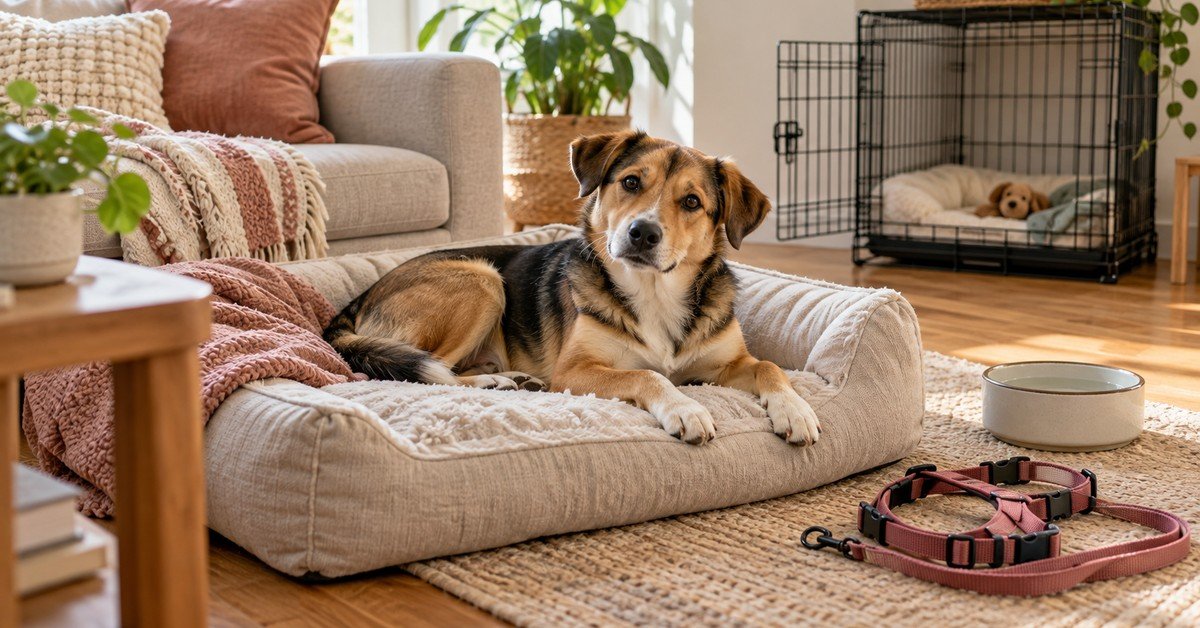
Essential dog gear should cover a real daily job, fit the dog in front of you, and remain easy to use when your hands are full. A new owner does not need a cart full of gadgets before the first walk; start with safe restraint, food and water, a comfortable resting place, cleanup supplies, and the records or medication your dog already needs.
Jump to a specific section on this article
Contents
Start with the dog and the household
A useful list changes with the dog’s size, age, coat, mobility, chewing habits and routine. A quiet adult in a small apartment may need a well-fitted harness, a washable bed and a measured feeding station. A young dog that explores with its mouth may need stronger supervision, chew-safe enrichment and a crate or pen introduced as a comfortable resting area. There is no universal box that fits every household.
Write down where the gear will be used: at home, on walks, in the car, outdoors or during an evacuation. Then note who handles it, how often it is cleaned, and whether the dog can use it comfortably. That simple audit removes duplicate items before you spend money.
Build the everyday kit by job
For walking, begin with an ID-bearing collar or harness that fits, a fixed-length leash suited to the handler, and waste bags. A harness is not automatically safer or more comfortable than a collar for every dog; fit, attachment position, gait and the dog’s response all matter. If your dog has a history of escaping, pulling hard or showing pain, ask a veterinarian or qualified reward-based trainer to help you choose and fit equipment.
For home, choose a resting place that is washable and large enough for the dog to stretch naturally. Add bowls that are stable and easy to clean. Keep food in its original labeled container or a clean, sealed bin, and store grooming tools where they will be used. For travel, add a carrier or vehicle restraint appropriate to the dog and vehicle, water, familiar food, a towel and a waste plan. An emergency kit is a separate job; the dedicated evacuation-kit review explains what first-aid pouches do not include.
Fit checks are more useful than labels
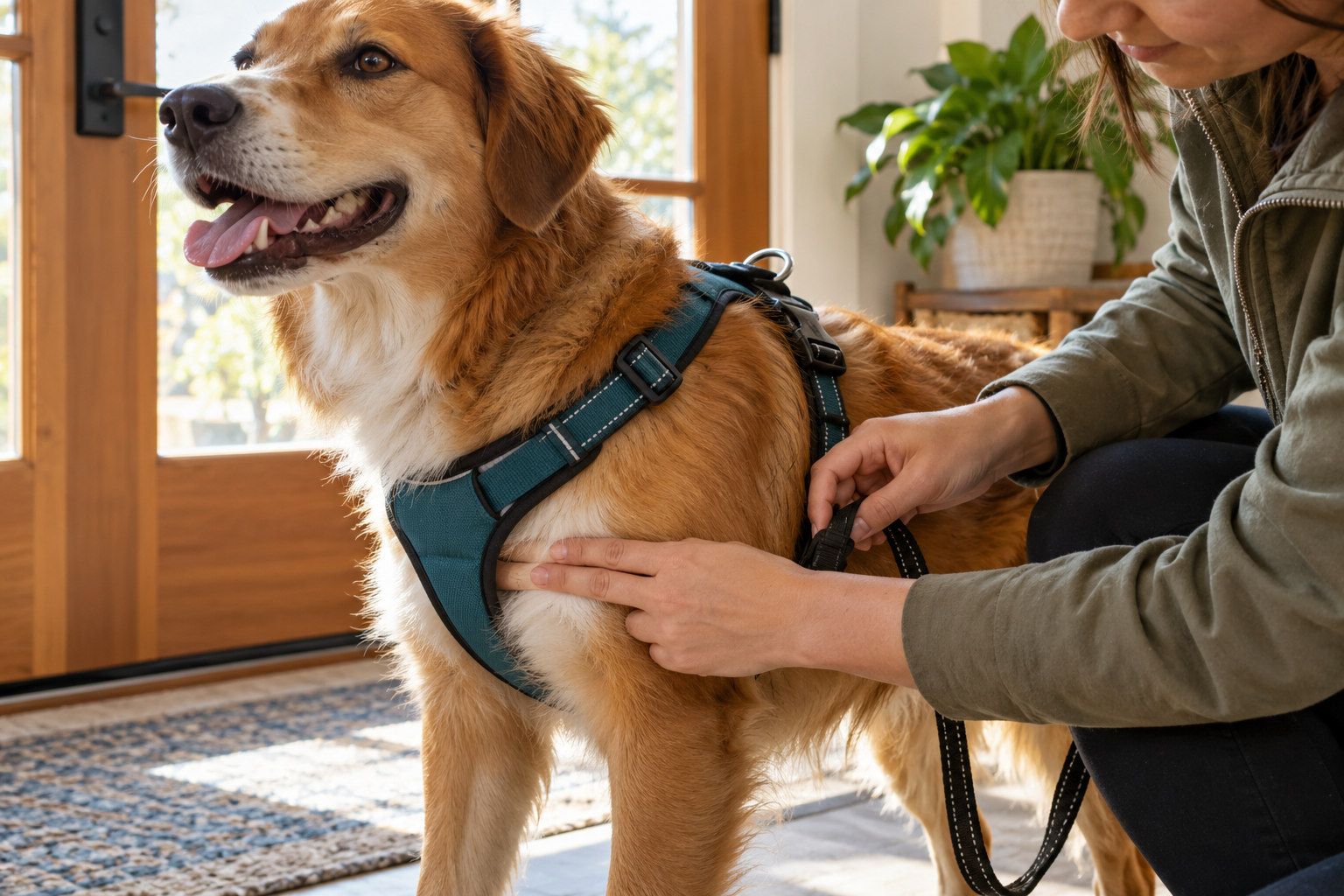
Before a walk, check that straps lie flat and do not rub, pinch or slide toward the eyes or throat. Follow the maker’s measurement instructions rather than choosing by breed name alone. Recheck after grooming, weight changes, coat changes and growth. For a crate, measure the dog standing and lying down; the dog should be able to stand, turn and rest naturally. A tight crate is not a training shortcut. A pen needs stable panels, a secure door and a surface the dog cannot push or chew through.
Watch what the dog does in the equipment. If the dog freezes, scratches repeatedly, tries to back out, pants in a cool room or changes its stride, stop and reassess. A product page can describe dimensions and materials; it cannot tell you whether a particular dog accepts the item.
Create a storage map that works on busy days
Keep the high-frequency items at the door: leash, walking harness, waste bags, towel and a treat pouch if you use one. Put food and feeding tools together near a cleanable surface. Store medication and veterinary records in a labeled, secure place. A travel pouch can hold a collapsible bowl, small towel and spare bags, but leave enough room for the actual food and medication your dog uses.
For apartments, vertical hooks and one lidded basket can keep gear visible without taking over the floor. Leave the route from the bed to the door clear. If you share care with another person, label the food measure, medication schedule and leash location so the routine does not depend on memory.
A three-stage buying plan
Buy first: a correctly sized collar or harness, leash, ID, bowls, food storage, waste bags and a comfortable bed. Buy next: grooming tools that match the coat, a crate or pen if it suits the dog, and travel gear for trips you actually take. Buy later: specialized backpacks, multiple enrichment toys, matching accessories and duplicate organizers. This order keeps safety and daily function ahead of novelty.
A product bundle can reduce shopping steps, but inspect the contents. It may include five toys and no ID tag, or bowls and a leash without a safe car restraint. The apartment starter-bundle guide separates practical kits from bundles that still need essential additions. For a newly adopted dog, use the first-home setup guide to prioritize a quiet resting zone.
Adjust the setup to age, health and season
A growing puppy can outgrow a harness or crate before the equipment wears out, so recheck fit often. For an older dog, consider whether a bed is easy to step onto and whether bowls are stable at the dog’s comfortable height. A dog with arthritis, breathing problems, skin irritation or a history of escape needs individual advice; choose equipment with your veterinarian or a qualified trainer when comfort or safety is uncertain. A product category cannot diagnose the reason a dog avoids a harness or resists a crate.
Weather also changes the list. A rain towel, paw-cleaning cloth or portable water bowl may be useful for a particular route, while a coat is only appropriate if the dog benefits from one and tolerates it. Avoid buying seasonal items by breed stereotype alone. Coat, body condition, age, health, temperature and activity all matter.
Keep an equipment check routine
Once a month, inspect leash stitching, clips, harness webbing, crate latches, carrier seams and the condition of chew toys. Replace cracked plastic, frayed straps and damaged clips before the next outing. Wash beds and bowls as their care labels allow; a product that cannot be cleaned in a realistic way tends to become clutter. Keep a note of sizes and purchase dates, especially for growing dogs.
After a move, a change in walking route or a new caregiver, test the routine at a quiet time. Can the dog reach water? Is the leash easy to find? Can the caregiver identify the food and medication? A small setup that everyone can use consistently is more valuable than a larger collection of gear with no clear home.
Essential dog gear for walking, home and travel
Measure the dog in the position the manufacturer specifies. Harness charts often ask for chest girth, and a crate decision also depends on the dog’s height and length. Breed names and weight ranges can narrow a search, but they do not show where a strap will sit on an individual body. After fitting, look for rubbing behind the front legs, pressure at the throat, slipping toward the eyes, or a shortened stride. Recheck while the dog walks, sits and turns. If a dog backs out of equipment, stop using that setup until you have a safer fit plan.
The same principle applies to beds and bowls. A senior dog may need a low entry, while a puppy may outgrow a small bed quickly. Raised bowls are not automatically better; ask the veterinarian before changing feeding height for a medical reason. Buy for observed comfort and the dog’s routine, then reassess as those needs change.
Make travel gear part of the routine before a trip
A travel kit should be assembled around the way the dog actually rides. Check the vehicle and restraint maker’s instructions, then practice attaching the equipment while parked. Keep the dog’s ID, leash, water, familiar food, waste bags, towel and any prescribed medication accessible. A carrier or tether should not block the driver or interfere with the vehicle’s controls. For longer trips, plan rest stops and a way to offer water without letting the dog roam unsecured near traffic.
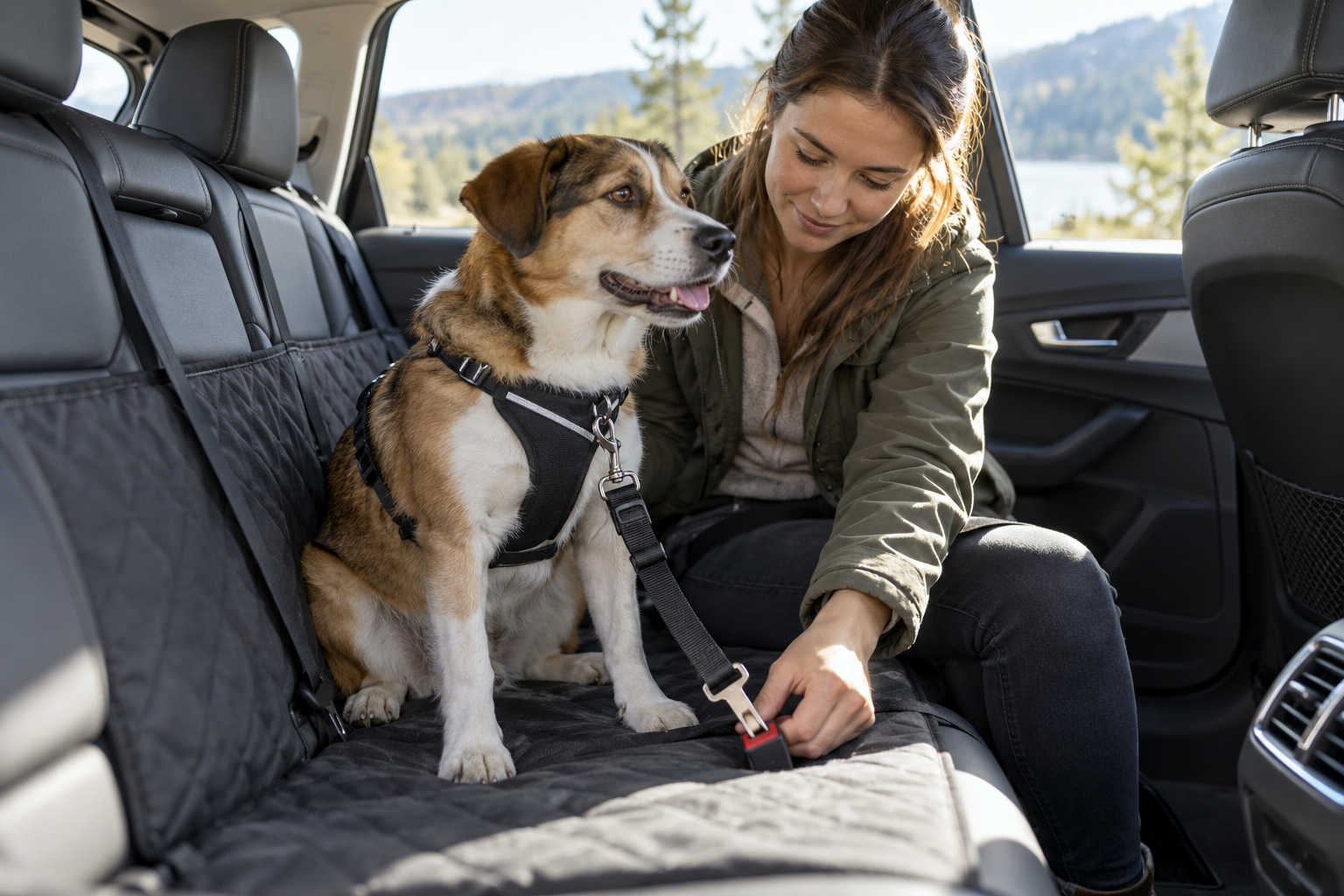
Do not assume that one harness can serve as a walking harness and a vehicle restraint. Some products are designed for a particular use, and the instructions may specify an attachment or size. If those details are unclear, contact the maker before using the item in a car. Keep a copy of veterinary and identification records with the travel supplies, especially when another caregiver may be driving.
Replace damaged gear before it fails during use
Check small wear points instead of waiting for a visible break. Run fingers along leash stitching, inspect clips for cracks or corrosion, and make sure crate doors latch without forcing them. Look at bed seams and toy surfaces for loose filling or pieces the dog could swallow. Replace damaged parts with a compatible item; a knot tied into a frayed leash or a clip that no longer closes can create a new failure point.
Set a calendar reminder for food, medication and emergency supplies that have use-by dates. Gear without an expiry date still needs inspection after heavy use, washing or exposure to heat and moisture. If a product comes with care instructions, follow them. Keep a simple note of the size and model that fits. That makes it easier to replace a worn item without repeating the entire search.
Use this checklist before the next order
| Job | Basic setup | Check before buying |
|---|---|---|
| Walks | ID, leash, harness or collar, waste bags | Fit, attachment point, handler comfort |
| Rest | Bed or suitable crate/pen | Dog size, quiet location, easy cleaning |
| Meals | Food, stable bowls, storage | Current diet, bowl stability, label |
| Travel | Carrier or vehicle restraint, water, towel | Vehicle instructions, fit, trip length |
| Care | Grooming items, medication, records | Coat needs, vet guidance, storage |
Common shopping traps
Buying a crate because it fits the room rather than the dog; choosing a harness by breed name; assuming a bundle contains food or a safe car restraint; and leaving emergency supplies until a storm warning appears. The premium gear-system comparison explains what to inspect before paying more.
Dog gear priority planner
Choose the jobs your current setup does not cover. The planner ranks the first gaps to solve; it does not choose a size or replace a fit check.
Select the areas already covered.
For the household side of emergency planning, the ASPCA disaster-preparedness checklist helps identify supplies and records that should be stored with the dog’s everyday gear.
FAQs
What dog gear should I buy first?
Start with well-fitting identification and walking gear, food and water bowls, cleanup supplies, a comfortable rest area and any medication or records the dog already needs. Choose a crate, pen or car restraint based on the dog and the way you live, not because a checklist says every dog needs the same item.
Do dogs need a crate and a bed?
Not every dog needs the same arrangement. A bed gives the dog a comfortable resting surface. A crate can be useful when introduced positively and sized correctly, but it should not be used as punishment or left as a substitute for supervision and exercise.
How do I know if a harness fits?
Follow the specific maker’s measuring directions, then check the harness on the dog. Straps should lie flat and avoid rubbing, pinching or limiting normal movement. Recheck after coat or weight changes and ask a veterinarian or qualified trainer if fit is difficult.
What belongs in a dog emergency kit?
Keep food, water, bowls, leash and ID, medication, medical records, waste supplies, a carrier or safe transport plan, and comfort items together. A first-aid pouch covers only a part of that list; the evacuation article compares what commercial kits include.
The practical verdict
The best essential dog gear list is the one that covers your dog’s actual routine and fits comfortably. Buy the walking, feeding, resting and cleanup basics first; add a crate, pen, travel restraint or specialized gear only when it solves a clear need. Then keep the items in predictable places and recheck their fit as your dog changes.